
Project title: VET-Caucasus – Strengthening VET systems in Armenia and Georgia for skills and workforce development, Erasmus+ ERASMUS-EDU-2025-CB-VET-NE
Grant Agreement Number: 101242599
Duration: 01.01.2026 – 31.12.2027 (24 months)
Total project funding: EUR 379,986.11
Project partners: Lead partner RISEBA University of Applied Sciences (Latvia), IDP SAS DI GIANCARLO COSTANTINO (ITALIAN DEVELOPMENT PARTNERS) – Italy, INSTITUT DE HAUTE FORMATION AUX POLITIQUES COMMUNAUTAIRES – Belgium, Yerevan State College of Informatics – Armenia, ARMENIAN STATE UNIVERSITY OF ECONOMICS – Armenia, BUSINESS AND TECHNOLOGY UNIVERSITY – Georgia, CONSTRUCTION COLLEGE CONSTRUCT 2 – Georgia.
Project objective
The objective of the VET Caucasus project is to strengthen the capacity of Vocational Education and Training (VET) systems in Armenia and Georgia by improving the quality of education, its relevance to labour market needs, and alignment with EU standards. The project aims to introduce and apply EU frameworks (EQF, ESCO, EQAVET, EntreComp, Europass), develop digital learning solutions and competence-based learning models, and promote stronger cooperation between VET institutions and labour market stakeholders in order to improve graduate employability and the resilience of VET systems.
Planned activities
- Capacity-building trainings for VET teachers and administrative staff on EU tools and quality assurance frameworks (EQF, ESCO, EQAVET, EntreComp, Europass, etc.).
- Development and maintenance of a Digital Learning Hub with open-access learning materials.
- Implementation of pilot programmes in Armenia and Georgia to test and introduce modern teaching methods in VET programmes.
- Development of sustainability measures and policy recommendations to integrate project results into national strategies.
- Organisation of dissemination activities in Armenia and Georgia involving stakeholders and policy makers.
Expected results
- Strengthened capacities of VET institutions in management, quality assurance and cooperation with the labour market.
- Introduction of EU frameworks (EQF, ESCO, EQAVET, EntreComp, Europass) into curriculum development and skills recognition.
- A functioning Digital Learning Hub with a wide range of open educational resources and an active user community.
- Modernised VET teaching methods and improved graduate employability through pilot programme implementation.
- Sustainable cooperation models between VET institutions, businesses and policy makers with long-term impact beyond the project duration.
Project Kick-Off: VET-Caucasus – Strengthening VET systems in Armenia and Georgia for skills and workforce development (GAP-101242599)
The RISEBA team, as the lead partner of this project – Juris Asars and Anna Kronberga – kicked off the project with an in-person meeting in Yerevan, Armenia, hosted by the Armenian State University of Economics.
The official kick-off meeting took place on 7 April, bringing together partners from Latvia, Belgium, Italy, Armenia and Georgia.
During the meeting, the consortium aligned on the project overview, discussed project management, task distribution, and key aspects of financial and administrative management, setting a strong foundation for successful cooperation.
👉 This kick-off marks the beginning of a 4-day working session, followed by a VET Caucasus Cooperation Model 3-day workshop.
The project aims to strengthen vocational education and training (VET) systems in Armenia and Georgia by improving quality, aligning with EU standards, and better connecting education with labour market needs.
The VET Caucasus project will run for 24 months, starting from January 2026.
Looking forward to a productive and impactful cooperation! 🌍
#vetcaucasus #erasmusplusproject #cofundedbytheeuropeanunion


The Erasmus+ VET-Caucasus project has completed Work Package 2 – Training Development, delivering practical resources to support vocational education and training (VET) providers in Armenia and Georgia. The results bring together cooperation and governance models, training materials on European tools and frameworks, and resources for integrating entrepreneurial competences into VET. The partnership has developed the VET-Caucasus Cooperation Model, which defines roles, responsibilities and mechanisms for collaboration between VET institutions, businesses and public authorities. The model provides a structured basis for international partnerships, knowledge exchange and stronger connections between vocational education and the world of work.
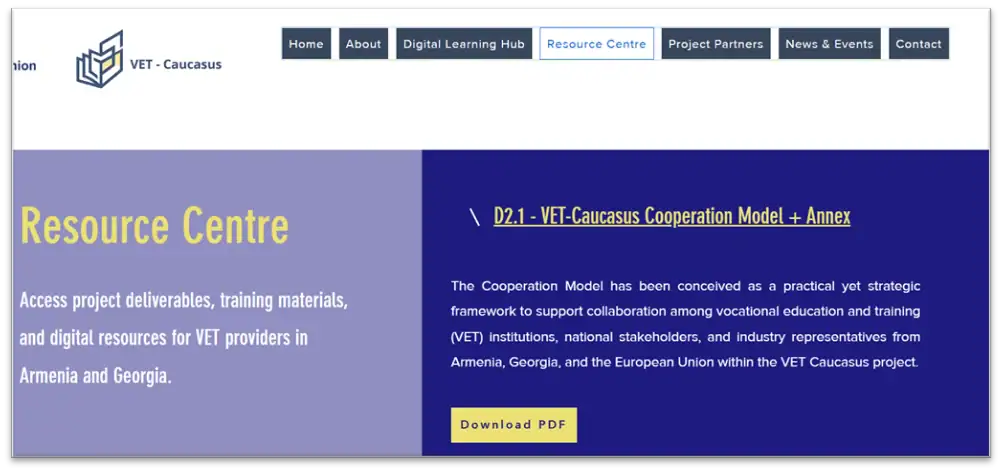
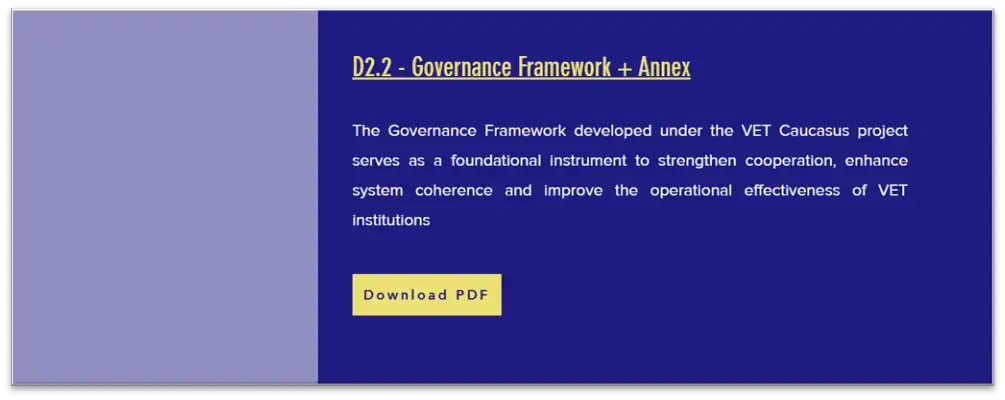
Alongside it, the Governance Framework for Inclusive and Quality-Focused VET offers guidance on institutional coordination, employer engagement and support for vulnerable learners. It helps VET providers strengthen partnerships and make their training more inclusive and responsive to labour market needs.
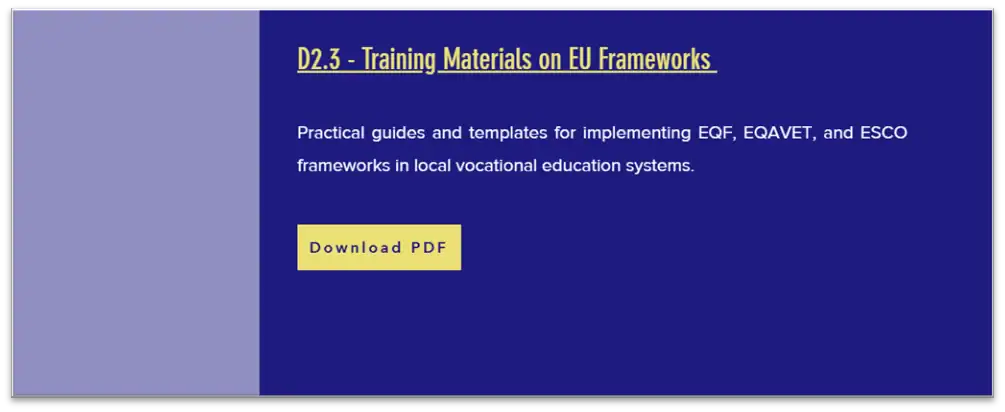
WP2 has also produced training materials and tools on European VET frameworks, covering the European Qualifications Framework (EQF), EQAVET, ESCO and Europass, together with Cedefop guidelines on learning outcomes. These resources provide practical guidance on comparing qualifications, mapping skills, documenting competences, designing training around learning outcomes and applying quality assurance principles.
To strengthen entrepreneurship education, partners have developed an EntreComp-based training package for use at both institutional and classroom levels. It includes strategic integration guidelines, teacher training materials, course development templates, assessment tools and practical exercises. The package supports the development of competences such as creativity, problem-solving, financial literacy and business management, with materials adaptable to classroom and blended learning.
All WP2 results are now available on the project website in English, Armenian and Georgian. Their translation and adaptation support accessibility and use within the Armenian and Georgian VET contexts.
VET providers, teachers, trainers, employers and policymakers are invited to explore the resources and discover how they can support cooperation, inclusive governance and innovative training.
For further information, access the resources or contact the project team:
Website: www.vetdigitalhub.com
Email: [email protected]