RISEBA Brings Together International Students in an Intensive Erasmus+ Programme on Advertising Psychology
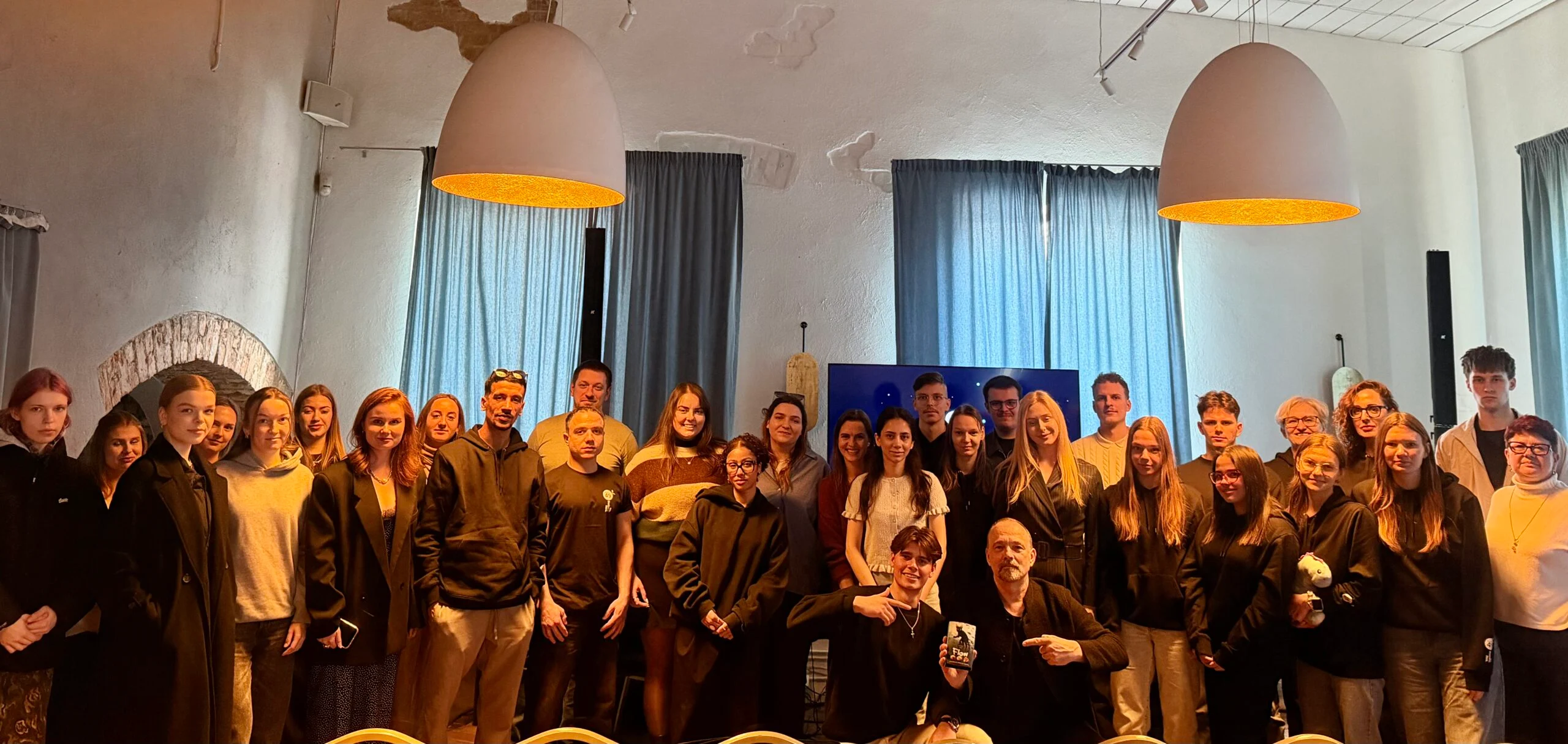
From April 13 to 17, 2026, RISEBA University hosted the Erasmus+ Blended Intensive Programme (BIP) “ImpactLab: Advertising Psychology – Persuasion, Emotion and Ethics”, bringing together students from Latvia, Lithuania, Poland, Ukraine, Slovenia, Azerbaijan, and Spain.
The aim of the programme was to deepen students’ understanding of advertising psychology, with a particular focus on the impact of communication on audiences, the role of emotions, and ethical considerations. At the same time, students developed the ability to apply theoretical knowledge in practice by creating communication solutions addressing relevant societal issues, including health habits, sustainability, and social responsibility.
The programme combined lectures with hands-on work, covering topics such as advertising psychology, audience behavior analysis, emotional influence, cognitive biases, and decision-making processes in communication. A special emphasis was placed on the transition from awareness to action, exploring how strategically designed communication shapes audience perception and behavior.
The learning experience was complemented by cultural activities – students took part in a guided tour of Riga Old Town and visited the Latvian National Library, where they continued their group work. Throughout the programme, students worked under the guidance of mentors, refining their ideas and developing intercultural collaboration skills.
At the end of the programme, eight teams presented communication concepts based on the principles of advertising psychology, addressing current societal challenges. The teams developed campaign ideas along with creative solutions, including visual and audiovisual prototypes (such as video concepts and advertising mock-ups), demonstrating their messaging approach and communication strategies.
- One team developed a campaign concept promoting blood donation, emphasizing individual responsibility and encouraging action.
- One team addressed food waste, highlighting consumer bias toward appearance and encouraging a shift in attitudes toward “imperfect” food.
- One team explored the impact of sleep deprivation, focusing on behavioral patterns and emotional influence.
- One team created a campaign highlighting that change begins with individual action rather than waiting for others.
- One team focused on the risks of a sedentary lifestyle, using visual solutions to encourage behavioral change.
- One team proposed a digital solution for more responsible tourism, focusing on educating travelers.
- One team developed a campaign concept for “Riga Food Festival,” emphasizing experience, emotion, and visual appeal to engage audiences.
- One team addressed the environmental impact of fast fashion, highlighting the issue of microplastics and the importance of sustainable consumption.
The programme also featured guest lectures and workshops led by industry professionals, including Uldis Cekulis, Board Member of the Latvian Producers Association, who delivered the workshop “The Illusion of Choice: How Stories Shape Attention & Emotion”, Andrei Salisbury, Founder of Salisbury Spring, who shared insights in the lecture “From Awareness to Action: Using Emotion and Ethics to Drive Real Impact”,Kārlis Ploks, RISEBA alumni mentor, who led the team activity “Kill Your Idea (and Make It Better)”, Mārtiņš Priedītis, RISEBA PhD student and alumni mentor, who delivered the session “Invisible Systems of Influence: How Modern Advertising Actually Targets You (and Who It Excludes)”, and Rimantė Hopenienė from Kaunas University of Technology, who delivered the lecture “Emotional Engineering in Advertising: The Power and Perils of Emotion-Driven Persuasion”, and Mārtiņš Veide Ph.D. (Psychology), Ph.D. (Education), Associate Professor at RISEBA, Senior Researcher, who led the lecture “Introduction to Advertising Psychology” and delivered the sessions “Cognitive Biases and Ethical Decision-Making in Advertising” and “Turning Ideas into Action”.
The programme demonstrated that international collaboration, combined with an academic approach and practical application, enables students to develop both professional and intercultural competencies while creating meaningful communication solutions for society.