Use the “Doctoral studies” discount of 20% for the entire study period. The discount is applied at the moment of signing the contract.
We strongly encourage candidates to submit their applications ahead of the deadline.
For any questions, feel free to contact the programme director.
The RISEBA academic doctoral program prepares candidates for the Doctor of Science (PhD) in Humanities and Arts Sciences. The program features highly qualified academic staff and offers modern technical infrastructure for the study process.
The field of study is accredited until December 10, 2031.
Doctor of Science (Ph.D.) in Humanities and Arts Sciences
Tuition fee per year:
Citizens and permanent residents of Latvia, as well as citizens of other EU, EEA, and EU candidate countries:
5640 EUR (Full-time day studies, English)
Other countries:
6500 EUR (Full-time day studies, English)
Use the “Doctoral studies” discount of 20% for the entire study period. The discount is applied at the moment of signing the contract.
Centered on practice-led art research and the transformative impact of digital technologies, the “Media Arts and Creative Technologies” doctoral program provides rigorous, high-level training in applying digital tools across diverse media environments, immersive platforms, and the audiovisual arts. The program fosters original, independent research that addresses global cultural, economic, social, and political contexts. By integrating cutting-edge technology with creative inquiry, it cultivates robust professional links between the creative industries and the broader business sector.
The program aims to develop highly competitive, research-driven professionals – artist – scholars who possess comprehensive expertise in emerging technologies, audiovisual arts, and digital culture. Graduates acquire specialized skills in artistic production, innovative media design, scientific research, and project management. Whether entering the labor market in innovation-led industries or pursuing distinguished academic careers, our graduates are prepared to generate new knowledge in digital media. Their work drives innovation in the creative use of technology, delivering meaningful impact on the cultural and socio-economic landscapes of Latvia and the international community.
Grounded in the principle of practice-led research, this doctoral programme is an interdisciplinary, innovation-oriented initiative in digital art and audiovisual media that integrates artistic creation with scientific-technological innovation and critical-analytical methods. The programme’s core approach is to foster an environment in which practice itself- understood as the active process of artistic creation, critical reflection, and the resulting generation of new theory and knowledge – is the central mode of artistic inquiry. Artists engaged in this research are regarded as “reflective practitioners.”
Lectures take place in person three times a year, each in a one-week colloquium format. Between colloquia, studies are supported through an online learning environment and through off-campus consultations and project development at external sites such as creative industry hubs, NGOs, government agencies, laboratories, research centres, and higher education institutions, as well as within networked communities. Research carried out in collaboration with external institutions is developed individually, with the support of a scientific supervision group.
The programme curriculum is designed to ensure the achievement of all learning outcomes and is structured as follows.
Part A: Foundations of Research (Compulsory Component) – 63 ECTS This foundational module provides the essential theoretical basis for doctoral work. It includes courses on Fundamentals of Research (A1), Themes and Research Processes (A2), and Research Criticism (A3).
Part B: Major Artistic Inquiry and Examinations – 120 ECTS This part is dedicated to the student’s independent research and its assessment. B1. Progress Reviews and Assessments: Annual reviews that track the development of the thesis project. B2. Major Artistic Inquiry: The core of the programme, encompassing the student’s primary artistic and academic research project – thesis design and development (104 ECTS). B3. Final Examinations: An essential component for graduation, concluding the programme with a comprehensive academic assessment (8 ECTS), consisting of two examinations:
Doctoral Examination: A practical exam in which the student presents and publicly defends a single, comprehensive arts research project developed over three years. The defence must demonstrate the ability to conduct original, academically significant research and to discuss its results, methodology, and findings.
English Language Examination: Assesses the student’s ability to use English effectively in academic and professional contexts. It evaluates receptive skills (listening) and productive skills (writing and speaking), with particular emphasis on presenting and discussing research findings within the wider international academic community.
Part C: Peer Esteem (Elective Component) – 15 ECTS This module allows students to select courses that build additional specialized skills.
Tasks of the Study Programme
To ensure a targeted and high-quality study process, to provide students with the necessary support in the improvement of knowledge and skills and research, to attract professionals in the field of media arts and creative technologies to the study program and research, and to promote professional development of LiepU and RISEBA teaching staff.
To develop a creative environment appropriate to the study and research of media arts and creative technologies and to offer multifaceted, interdisciplinary academic education, to continuously supplement the material and technical base, and to develop cooperation with creative industries and contemporary culture organizations.
To stimulate students’ creative potential in the development of innovative ideas, to improve the skills and abilities necessary for professionalism and research work, and to offer versatile opportunities for the presentation of research projects.
To provide students with versatile opportunities to participate in the cooperation network of partner universities and partner organizations and projects initiated by it, to stimulate the integration of art research projects in other scientific fields, as well as international recognition.
To strengthen the understanding of the culture-based economy, to provide students with the necessary support in the development of knowledge and skills and research, providing students with opportunities to acquire entrepreneurial knowledge alongside the skills and experience of cultural project management.
To ensure the acquisition of the highest level of knowledge for students who, upon graduation, can become experts, authors of recommendations and project evaluators in national, European Union and international organizations.
Study Results to Be Achieved
The degree to be obtained – Ph.D. in Humanities and Arts Sciences – reflects the programme’s objective: by combining the resources and experience of both universities, the programme delivers high-quality, innovative doctoral studies in the humanities and arts, specifically in the field “Other Humanities and Arts, including Creative Industry Sciences.” Graduates are prepared for academic careers and for positions within the creative industries. Upon completion, they will be professional media artists, academic researchers, and socially engaged citizens, equipped with advanced, high-quality education in media arts and with the specialized knowledge of creative technologies, management, and marketing needed to compete successfully in the labour market.
The programme’s learning outcomes are aligned with Level 8 of the European Qualifications Framework (EQF) and the Latvian Qualifications Framework (LQF), as well as with the qualification standards of the third cycle of the European Qualifications Framework for the Higher Education Area. At the conclusion of the programme, the doctoral student:
Knows and understands the most up-to-date scientific theories and insights, and masters research methodology and modern research methods in media arts and creative technologies and at their intersection with other fields.
Is able independently to evaluate and select methods appropriate to scientific research, and expands the boundaries of knowledge by conducting substantial original research, part of which is published in internationally cited outlets.
Is able to communicate, both orally and in writing, about media arts and creative technologies with the wider scientific community and with the general public.
Is able independently to enhance their scientific qualifications and to implement research projects, achieving results that meet the international standards of the field.
Is able to manage research or development tasks in companies, institutions, and organizations that require advanced research knowledge and skills.
Is able, through independent and critical analysis, synthesis, and evaluation, to solve significant research or innovation problems, to formulate research ideas, and to plan, structure, and manage large-scale scientific projects, including international projects.
Is able to make scientifically grounded decisions when solving problems and to defend their position in a reasoned manner.
Is able to lead and coordinate multidisciplinary media arts and creative technology teams and to collaborate effectively in an international context.
Is able to demonstrate a high degree of authority, innovation, autonomy, and professional responsibility, and to show sustained commitment to developing new ideas or processes at the forefront of work and media, including research.
Colloquia are held at the Architecture and Media Centre H2O6, located at 4 Durbes Street – a facility fully equipped with specialized video, sound, and editing studios. Doctoral students may earn academic credit by participating in joint creative seminars at our partner institution, Dublin University of Technology (Ireland), as well as through international scientific conferences. Notable events include “Open Fields” and “Renewable Futures,” which are organized in collaboration with various partner universities, dedicated to advancing art and science research in Northern Europe and are supported by an extensive global network of over 60 universities across 30 countries.
The Academic Doctoral Programme is interdisciplinary and innovation-oriented. It is based on practice-led research in digital arts and audiovisual media, combining artistic creativity, scientific-technological innovation and critical-analytical research methods.
The programme aims to train competitive professionals with diverse skills, knowledge and practical experience in the creation of artworks and the production of innovative media projects, the realisation of creative digital cultural projects, as well as in scientific research and the generation of new knowledge. The degree is a prerequisite not only for a successful individual career in the arts, media, innovation technology and creative industries, but also for an academic career in higher education.
The programme is delivered in a “low-residency” format, prioritising remote, independent research. The academic structure is anchored by three mandatory on-site symposia per year, each conducted as a one-week intensive colloquium. The first colloquium, held in February, marks the start of the academic year in Riga and is hosted by RISEBA. The second (summer) session is an off-site colloquium—for instance, at the SERDE Interdisciplinary Art Group in Aizpute—while the third (autumn) session returns to RISEBA.
Between these sessions, students conduct individual research in close collaboration with their scientific supervisors and programme experts. This flexible model allows researchers to pursue high-level, interdisciplinary study without relocating or interrupting their professional careers. At the end of the third year, students undergo a final pre-defence examination in English. Upon successful completion of this exam and graduation from the coursework phase, the candidate proceeds to the formal thesis defence. This final stage typically takes three to twelve months, depending on the scholastic rigor of final thesis culminating in the award of the doctoral degree.
The second cycle higher education: academic or professional Master’s Degree in Humanities and Arts sciences, Music, Visual Arts and Architecture, as well as other humanities and arts, including creative industry sciences: the English language proficiency at least on B2 level; entrance examination.
or
The second cycle higher education: academic or professional master’s degree in other humanities and arts (History and Archaeology, Linguistics and Literature, Philosophy, Ethics and Religion), social sciences, educational sciences, engineering, computer science or other field, etc.; work experience in professional artistic creation as an author or self-employed person/work in the creative industries, culture, art or music (at least 24 months) or study courses in the humanities and arts of at least 12 credits (18 ECTS):
Art History or Art Theory of at least 4 credits (6 ECTS),
philosophy, cultural history or cultural theory of at least 4 credits (6 ECTS) ,
New Media Art, Audiovisual Art or Design at least 4 credits (6 ECTS);
– the English language proficiency at least on B2 level;
– entrance exam.
To apply for Doctoral studies:
Send the research application to the administrative director of the doctoral programme, Asst. Prof. Aigars Ceplītis, [email protected].
The doctoral dissertation research application form can be downloaded HERE or can be received by email by contacting the programme administrator.
Please read the admission rules published on our website under Study at RISEBA -> Admission rules
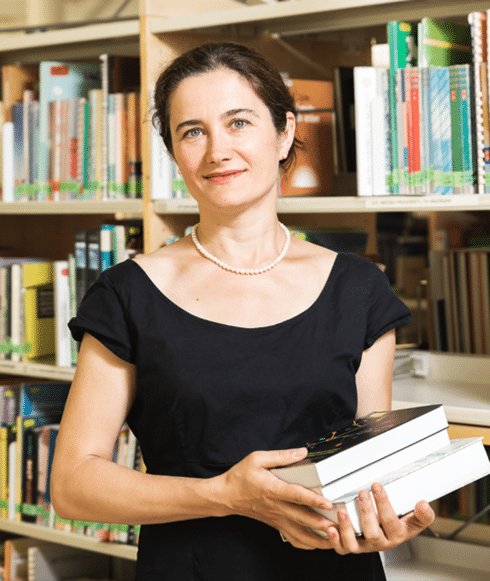
Dr. Ieva Gintere
RISEBA Associate Professor Dr. Ieva Gintere is a distinguished academic specializing in contemporary aesthetics, music theory, and digital technologies. Dr. Ieva Gintere holds a violin performance degree from the Jāzeps Vītols Latvian Academy of Music (1999), Master’s degrees from the Latvian Academy of Culture (2002) and University of Latvia (2004), and completed her Dr.art. in contemporary musicology (2014) with doctoral studies at the University of Paris-X Nanterre. She also serves as Lead Researcher at Vidzeme University of Applied Sciences since 2015, whereby her research focuses on transdisciplinary methodologies and integrating modern technologies with art theory, pioneering digital art game development through projects like “Art Space” and “ImGame” for contemporary art education. She has contributed international publications, presented at European conferences, collaborated with institutions in Greece, Hungary, and France, and lectured across Georgia, Romania, and Latvia.
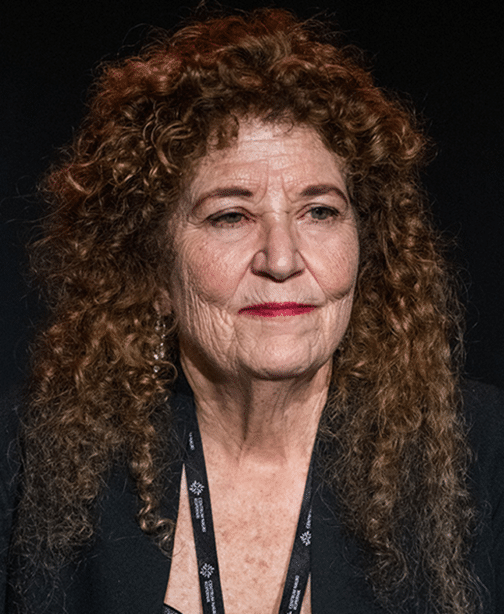
Dr. Ellen Pearlman
RISEBA Senior Research and Assistant Professor Dr. Ellen Pearlman is an immersive and artificial intelligence media artist, critic, curator, and educator who serves in the Faculty of Media and Creative Technologies. She earned her Ph.D. in Digital Media from Hong Kong City University, focusing on consciousness, surveillance, and biometric technologies through innovative art. Dr. Pearlman is is known for pioneering works like the brainwave opera “Noor,” the AI-driven “AIBO,” and the Lumen Prize finalist “Language Is Leaving Me.” Her career includes roles as a Fulbright Scholar at the University of Warsaw, MIT Research Fellow, and NYU Visiting Research Scholar, as well as leadership positions at Art-A-Hack™ and the New York Volumetric Society. She has received major honors such as the EU Vertigo STARTS Laureate and multiple Fulbright awards, and her research and creative projects have been presented at leading conferences and institutions worldwide.
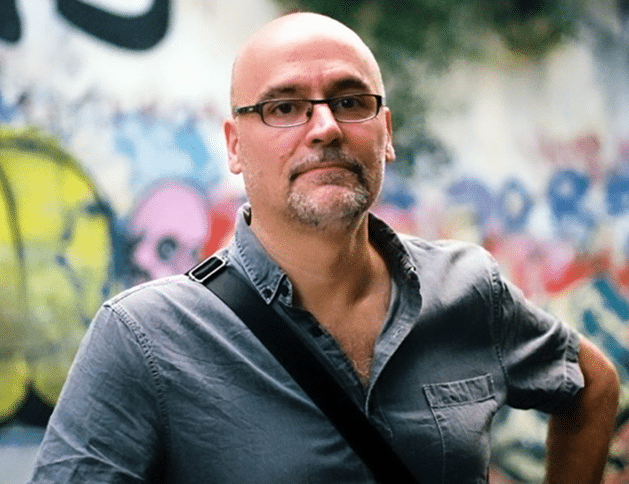
Dr. Pierre Jolivet
Dr. Pierre Jolivet, the core member of the Faculty of Media and Creative Technologies is an internationally recognized sound artist and composer best known for his pioneering work under the moniker Pacific 231. Beginning his career in the early 1980s, Jolivet was a French pioneer in the industrial and power electronics music scenes before evolving his practice toward ambient and abstract electronic sound. His extensive discography exceeds twenty albums, featuring numerous international collaborations. Jolivet’s work explores the boundaries of sound and space, often realized through multimedia performances and installations such as Stif(f)le, Im’shi, Espace Altéré, and the audiovisual production Micromega, presented in various countries. He has also contributed to the field as a member of the Luigi Russolo jury, a prestigious international award in acousmatic music. Dr. Pierre Jolivet holds an MFA in the Digital World with First Class Honours from the National College of Art and Design and completed a PhD in Sonic Art and Sensorial Perception at University College Dublin. His academic and research interests focus on the intersection of sound, sensors, and immersive environments, with recent work investigating the connections between sonic art and sensorial practice.
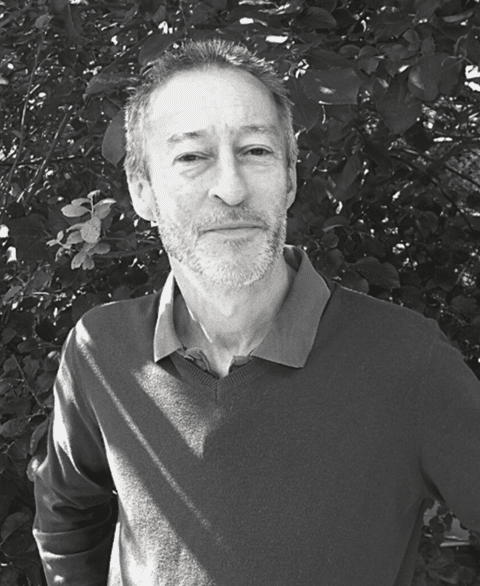
Dr. Christopher Hales
RISEBA Assistant Professor Dr. Hales earned his Ph.D. in Interactive Film Art from the Royal College of Art in London in 2006, with his dissertation titled “Rethinking the Interactive Movie”. His academic foundation includes a Master’s degree in Interactive Multimedia from the Royal College of Art in 1994. Throughout his career, he has served as a Post Doctoral Research Fellow at the University of East London’s SMARTlab centre and taught as Senior Lecturer at the University of West of England Faculty of Art, Media & Design. His extensive teaching experience includes conducting over 125 workshops across Europe on interactive filmmaking and AI-enhanced media creation, with particular focus on the Baltic States where he has regularly taught since 2002. Currently, he leads cutting-edge research in what he terms the “Latent Revolution” in filmmaking, exploring how artificial intelligence and machine learning are transforming experimental cinema through neural networks and generative adversarial networks (GANs). His work bridges traditional filmmaking practices with emerging AI technologies, positioning him at the forefront of contemporary discussions about the future of creative media production.
Dr. Rasa Šmite
Dr. Rasa Šmiteis a leading Latvian and international new media artist, researcher, and innovator at the crossroads of art, science, and technology since the 1990s. Born in Riga in 1969, she co-founded the RIXC Art Science Center, a major hub for new media art and scientific collaboration. She is Professor and Co-director of RISEBA/ RTU joint MACT PhD program (Media Art and Creative Technologies) at RTU Liepaja academy and RISEBA, and a researcher at Basel Academy of Art and Design FHNW in Switzerland. Her collaborative projects with Raitis Šmits as “smitesmits.com” range from early internet radio to AI and XR-based art, earning awards like the Prix Ars Electronica and the Falling Walls Science Breakthrough Award, and international exhibitions at major world venues.As Professor and MACT program core faculty, Šmite bridges academic leadership with creative practice, designing curricula that reflect her interdisciplinary methodology. She has taught at MIT and other top institutions, and her mentorship of doctoral students keeps her engaged with new immersive technologies and cutting edge.
Artis Dzērve
Artis Dzērve is a renowned Latvian video and 3D mapping artist celebrated for his innovative work in video scenography, digital installations, and projection mapping. With over 15 years of experience in audiovisual and interactive arts, Dzērve has become a key figure in integrating digital media into theatre, opera, and large-scale public events. He is especially recognized for his immersive video designs for leading Latvian theatres, including Dailes Theatre and the Latvian National Opera, as well as international productions in Austria, Germany, Belgium, and France. His creative achievements have earned him prestigious awards such as the Great Musical Award and the “Spēlmaņu nakts” theatre prize, highlighting his influence on contemporary stagecraft. Dzērve studied at the Hamburg Academy of Fine Arts under the mentorship of performance art legend Marina Abramović, which shaped his experimental approach to media art. His portfolio spans video advertising, interactive installations, and high-profile video mapping projects for festivals like “Staro Rīga” and concerts at Arena Riga. As an educator, he shares his expertise at RISEBA University, teaching courses in audiovisual media art and digital scenography, characterized by a seamless fusion of technology and artistic vision, consistently pushing boundaries in 3D mapping and digital storytelling.
Mg.art., Antra Cilinska
Antra Cilinska is a prominent Latvian film producer, director, and editor, recognized for her significant contributions to documentary and feature filmmaking since the early 1990s. Born on March 12, 1963, in Iecava, Latvia, she began her career as a film editor at Riga Film Studio, collaborating with acclaimed director Juris Podnieks on internationally renowned documentaries such as “Is It Easy to Be Young?”, “Hello, Do You Hear Us?”, and “Homeland.” Following Podnieks’ passing, Cilinska completed his unfinished projects and emerged as a leading figure in Latvian cinema. Since 1994, Cilinska has served as director and producer at the independent Juris Podnieks Studio, overseeing a diverse portfolio of documentaries, animation, and fiction films. Her acclaimed works include “Baltijas sāga” (2000), “Laimes formula” (2015), “Iemesti pasaulē” (2018), and the follow-up series to “Is It Easy to Be Young?”—the latter earning the FIPRESCI Prize at the Leipzig Film Festival. Cilinska’s films often explore the relationship between individuals and society, and she is noted for her socially engaged approach. In addition to her production work, she has taught editing and production at the Latvian Academy of Culture since 2008, further shaping the next generation of Latvian filmmakers.
Dr. Aigars Ceplitis
RISEBA Assistant Professor Dr. Aigars Ceplītis is a Latvian film editor, and educator known for his expertise in audiovisual media, film editing, and immersive cinema technologies. He serves as Dean of the Faculty of Media and Creative Technologies at RISEBA University of Applied Sciences, where he is also the administrative director of the doctoral program “Media Arts and Creative Technologies” and director of the master’s program “New Media and Audiovisual Arts.” His teaching covers topics such as film editing, narratology, and 360° spherical cinema, reflecting his commitment to both traditional and cutting-edge art practices. Dr. Ceplītis holds a PhD from Riga Technical University, an M.F.A. in Film from the California Institute of the Arts (2004) and a B.A. in Art History from Lawrence University, USA. He has also studied theater directing at DePaul University’s John Goodman School of Drama in Chicago. As a researcher, he investigates narrative taxonomies for 360-degree stereoscopic films and published on digital storytelling and AI. In addition to his academic work, he is an accomplished film editor, credited on projects such as “Begletsy,” “Mazliet Ilgāk,” “Analog Days,”, “Killers”, and TV miniseries “Secrets of the Baltic Hotel”.
Dr. Efe Duyan
RISEBA Associate Professor Dr. Efe Duyan, born in Istanbul in 1981, has been teaching theory, history, and design at Mimar Sinan University since 2013. He has been associated with several universities in conducting research and guest lectures, such as Technical University Berlin, Ca’ Foscari University, University of Minnesota, Istanbul Technical University, Atalanta University, University of Iowa, George Washington University, and Boston University of Massachusetts.
Efes’ research areas include contemporary design, critical design perspectives, spatial experience, architectural writing and theory, early modernism, and the history of Eastern Mediterranean architecture.
He has studied architecture and philosophy at METU (Bachelor’s gr. – 2005), architectural history and theory at YTU (Master’s gr. – 2008) and architectural history at Mimar Sinan FAU (Doctoral gr. – 2013). He also has an international career as a poet and author. His poetry has been translated into more than twenty-five languages and invited to numerous literary events around the world, including the University of Iowa’s International Writing Program and St. Louis University’s Hurst Professor Program.
Mg.art. Mihails Matvejenko
Mihails Matvejenko is a Latvian visual-effects compositor and digital artist who emerged from Riga’s Vilks Studija/Vilks Productions scene, where he honed his skills on music-video and commercial projects before moving into feature-film work. Regarded as one of Latvia’s leading special-effects practitioners, he later enrolled in the joint master’s programme “New Media and Audiovisual Art” at RISEBA University to deepen his expertise in artificial-intelligence tools for post-production. Since 2017 Matvejenko’s photoreal compositing has appeared in international productions such as Skybound (2017), Pocket Hercules: Naim Süleymanoglu (2019), Infinite Storm (2022) and the Finnish-Latvian family fantasy Antero Varovainen ja onnenkivi (2023). Working freelance from Riga, he provides VFX services to European and U.S. studios while mentoring students and collaborating with RISEBA research teams on AI-driven workflows for virtual production.
Mg.art. Sabrina Durling – Jones
Sabrina is a filmmaker and creative technologist focused on data and visual storytelling through established and emergent (AI) technologies. Her current research and practical work center on the intersection of memory, displacement, and ethical applications of AI/Machine Learning (ML). She is in the final stages of completing a PhD in Media Art and Creative Technologies through a joint doctoral program at RISEBA University of Applied Sciences and Riga Technical University (Latvia). Her research proposes a phenomenology of Steinian non-actuality for algorithmic memory practices and experiments with using emerging technologies to create embodied memory sensations. Her focus is on developing a framework for coping that can assist those living in displacement re-orient themselves in the present. Prior to returning to academia, Sabrina’s professional pursuits included teaching those living in remote areas of the world, especially First Nations/First Peoples, how to use digital media tools to tell stories and preserve languages and cultures through community-led projects.
Mg.art. Andris Gauja
Andris Gauja is a Latvian filmmaker, screenwriter, and producer based in Riga. He is the founder of the independent film production company Riverbed, established in 2011. Gauja is known for his work in both documentary and narrative cinema, often exploring thought-provoking themes with a strong visual style. He first gained international recognition with his documentary “Family Instinct” (2010), which won the Grand Prix at AFI Docs (formerly Silverdocs), was nominated for Best Mid-length Documentary at IDFA (Amsterdam), and was selected for over 25 international film festivals. Gauja made his narrative feature debut with “The Lesson” (“Izlaiduma gads”, 2014), which premiered at the Montreal World Film Festival and became a box-office hit in Latvia. His subsequent fiction film, “Nothing Can Stop Us Now” (2019), received nine nominations at the Latvian National Film Prize.
In recent years, Gauja has returned to documentary filmmaking, focusing on scientific and metaphysical topics, as seen in his short film “The Art of Looking” (2024), which premiered at ArtDocFest Riga and was part of his academic work as a doctoral candidate at the Latvian Academy of Culture.
Upon completion of their doctoral studies, students become professional media artists, academic researchers and socially active citizens who have received an innovative and high-quality media arts education and who are also able to compete in the labour market, as they have the necessary specific knowledge and skills in working with different creative technologies, as well as management and marketing knowledge.
The obtained academic degree is a prerequisite not only for a successful individual career in the art, media, innovation technology and creative industries, but also for an academic career in higher education institutions and in international level research. Graduates of the new programme will be well prepared to participate in the shaping of contemporary culture in its broadest sense, working in local, national, European Union and international organisations as experts, consultants, recommenders, and project evaluators, as well as initiators of various innovations in these organisations.
The international aspect of the programme is very important: artist-researchers who have graduated from this programme will orient themselves in the international environment and circulation of media art, and will be able to contribute to the further scientific and educational development of media art.
Any student of the doctoral programme who has completed at least one year of study without any academic or financial debt can participate in the Erasmus+ exchange programme. A student can go to study at one of RISEBA’s partner universities. The duration of study mobility is 2–12 months. The student does not have to pay for the period spent in the study and internship exchange programme abroad; the tuition fee is covered by the partner university, but the student continues to pay the RISEBA tuition fee. For the period spent abroad during mobility, the student is awarded an Erasmus+ scholarship to cover the costs of transport and accommodation. * Erasmus+ internship mobility provides that a student can undergo an internship in one of the companies of interest in one of the Erasmus+ programme countries. For this internship period, the student receives an Erasmus+ scholarship. The duration of internship mobility is 2–12 months.
Since the 2023/2024 academic year, information on the self-assessment of the study programme has been included in the study field progress report, which is available here.
The doctoral dissertation research application form can be downloaded HERE or can be received by email by contacting the programme administrator.
Assistant Professor, PhD Aigars Ceplītis, RISEBA – Director of the Doctoral Programme, RISEBA University of Applied Sciences. Teleph.: +371 25620270 E-mail:[email protected]
Assistant Professor, PhD Christopher Hales / Associate Professor, RISEBA – Director of Studies, Doctoral Programme, RISEBA University of Applied Sciences.
Dean of Faculty of Media and Creative Technologies, Administrative Director of the Doctoral programme “Media Arts and Creative technologies”, Assistant Professor, Lead Researcher